Csongor and Tünde’s separation
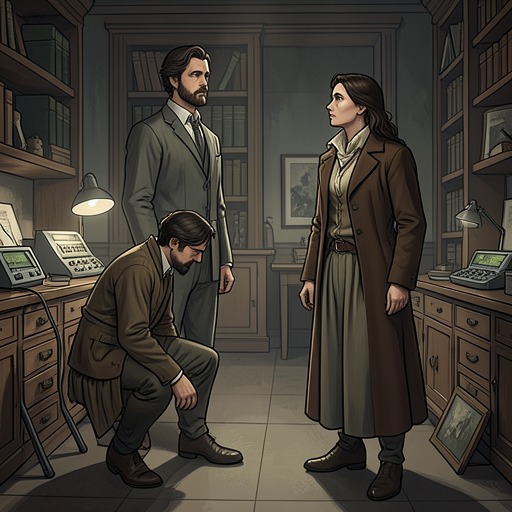
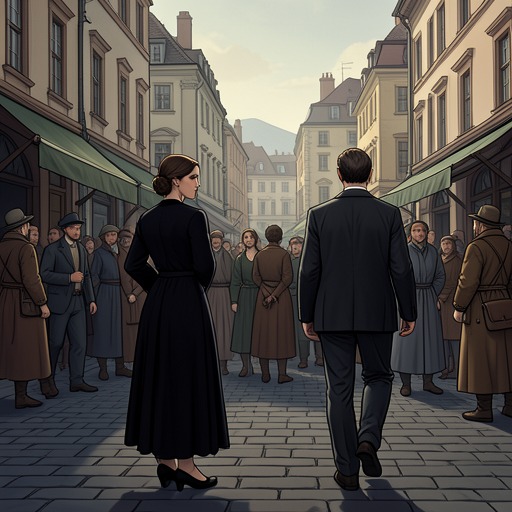
Csongor és TündeCsongor and Tünde’s separation is the central state of suspended desire in their story: Tünde departs under the pressure of fate, and Csongor’s search carries him through repeated uncertainty and near-misses before they finally recognize one another. Its force lies not only in distance but in the lovers’ unequal passage through time: one leaves, the other waits and pursues, and reunion comes only after suffering has made the longing unmistakable.
Departure and the Wound of Separation
Tünde’s departure is marked by the abrupt reversal of the refuge she had hoped to find. The first night brings injury and betrayal: her secrets have been exposed, and hostile powers play upon them. In response, she turns back toward her distant homeland, taking her treasure with her. The departure is therefore more than a change of place. A hoped-for shelter becomes unsafe, and the bond with Csongor is caught in a larger pressure that neither can simply dismiss.
As night passes, Tünde names the force pursuing her as fate. She bids a sorrowful farewell to joy and to Csongor, then leaves. The scene fixes the separation as a compelled parting rather than a mutual choice: love remains, but the power driving her onward overrides the possibility of staying. Her farewell joins personal loss to the story’s larger pattern of enchantment and constraint.
Csongor’s response makes the departure an active wound rather than a completed episode. He declares that he has no peace and no life until his arms can hold her, and then leaves as well. The physical image of an embrace becomes the measure of what is missing. His pursuit begins not with a secure route or a clear promise, but with an absence he cannot accept as final.
The Search Through Uncertain Ground
The journey unfolds in a landscape explicitly associated with error and choice. At the three-way crossroads, Csongor confronts a place where paths divide and certainty does not. The setting gives the separation a spatial form: the lovers are not merely apart, but their passage through the world is vulnerable to wrong turns, obstruction, and the difficulty of finding the way back to one another.
The plot repeatedly places the lovers near the same scene without granting them a meeting. At one point Tünde and Ilma arrive after Csongor has fallen asleep. Tünde asks whether he is waiting for her in sleep; the possibility of reunion is present, but only as a question addressed to an unconscious beloved. His sleep makes the missed encounter especially stark: he is physically there, yet unable to answer or receive her. Their separation is prolonged not simply by distance but by timing that repeatedly fails them.
The interval also carries a cruel disparity of experience. Tünde recognizes the delay as irreversible in that moment: her time has flown, she must go, and hope gives way to the prospect of living in pain. The recognition transforms the missed meeting into more than a temporary disappointment. What might have been a brief pause becomes, from her perspective, a lasting sentence of separation.
Repetition, Witness, and Nearness
The repeated arrivals and departures make separation a structure that recurs across the drama rather than a single event. Tünde and Ilma appear together in the course of the pursuit, while Csongor’s entrances continue separately; the stage directions preserve the lovers’ parallel movement even when their paths do not converge. These repetitions create a pattern of approach without possession, in which each new appearance renews the possibility of recognition and the risk of another miss.
The pattern is particularly sharp when Tünde finds Csongor asleep. Her question about whether he waits for her even in sleep exposes the emotional contradiction of the scene: his longing is intense, yet longing alone cannot make him present to her at the needed moment. The separation thus turns on more than devotion. It tests whether desire can survive the mismatch between the lovers’ movements, circumstances, and opportunities to meet.
When Tünde concludes that time has escaped and that she must leave without hope, the language of departure closes down the possibility she had briefly entertained. Her pain is not presented as proof that love has ended; it is the consequence of love remaining while reunion seems unavailable. In this way, the separation heightens the contrast between emotional constancy and the unstable conditions governing the lovers’ encounter.
Recognition and Release
The eventual meeting reverses the long pattern of absence. Tünde approaches alone, and Csongor at last recognizes her: after so much suffering, he can rest against her. The reunion answers the earlier image of arms unable to hold their beloved. What began as longing measured by an absent embrace ends in bodily closeness and repose.
The ending gives the separation a clear narrative function without making its pain incidental. Csongor’s journey has passed through mistaken paths, sleep, and failed timing; Tünde has had to leave even when she still sought him. Their final recognition resolves that division, but the relief carries the weight of what preceded it. Rest is meaningful because it comes after prolonged uncertainty, and the lovers’ nearness stands against the repeated departures that had kept them apart.